How to Apologize in Marriage and Heal Faster


It usually starts like nothing serious. A sharp comment during conversations, an eye roll over an argument about who brings the children to school. A whatever” is softly spoken while going to the kitchen. Neither of you even sees that as a problem.
However, 3 days later, you are not talking to each other the way you used to, and you sleep on opposite sides of the bed, and not making even a little eye contact. Silence has now become its own kind of argument.
After 15 years of sitting across from partners in my counseling office, I can boldly tell you that the right itself doesn’t break a marriage, but what happens or doesn’t happen after the fight. Most couples have not yet learned how to apologize in marriage in a way that will help repair the hurts and damages.
All they do is say sorry, and think the repair has been done, yet the hurt lingers until it results in resentment and finally builds a wall between them. The truth is that the salary and that half-hearted sorry are more costly than you could think.
When those hurts are left unaddressed, the trust you fought so hard to build will be eroded, until the two of you who were once best of friends now feel like roommates.
In today’s post, we will delve into why apologies are important, why most apology attempts fail, the psychology of real emotional healing, and how to apologize in marriage. I will also show you step-by-step ways to apply these, so your relationship can heal faster. Let’s dive in.
Why Apologies Matter More Than Most Couples Think:
Every marriage thrives on a foundation of emotional safety. This is the quiet sense that you can be your full self with your partner and still be loved. Every unhealed wound erodes the foundation.
However, when you understand that learning how to apologize in marriage is not about winning back approval, but about restoring the sense of safety that both of you can be free with each other.
According to relationship researchers Dr. John Gottman, after spending decades studying what differentiates couples who last from those who don’t, said that successful couples are not without conflicts, but know how to repair it after. Gottman describes this as “repair attempts.”
Additionally, how couples handle these moments predicts how healthy their relationship is. A genuine apology does more than soften heated arguments; it rebuilds trust over time.
It also communicates respect and that your spouse’s feelings matter more to you. Over the years, this kind of repeated repair will keep your intimacy alive, as neither of you has to bring old wounds into a new conversation.
Learning how to apologize in marriage is the best choice you can make to protect both emotional safety and strengthen your relationship over time.
Why Most Marriage Apologies Fail:
Most marriages struggle because of poor communication. Most apologies fail before they are even said, because they are built around self-protection and not genuine repentance.
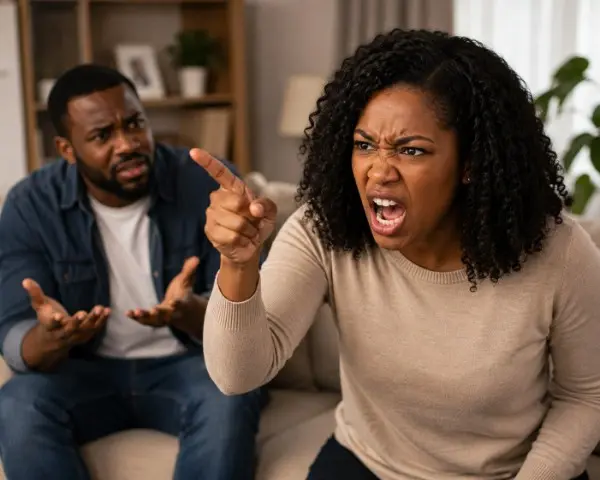
Here is the pattern most couples use often:
I’m sorry if you were offended.” This sounds good, doesn’t it, but it is not an apology, but technicality. It shifts responsibility onto your partner’s reaction instead of owning your behaviour.
Blaming your spouse. “I wouldn’t have fallen on it if you hadn’t pushed me” turns an apology into a fresh accusation.
Rushing forgiveness. Demanding “we’re okay now, right?” moments after apologizing does not give your spouse the space they need to actually process what happened.
Defending yourself in the midst of an apology. The moment you turn to defend your side, your spouse will immediately stop feeling heard.
Apologizing without changing behaviour. Your partner expects to see changes after you have apologized, but when action didn’t follow your words, your words stop meaning anything at all.
Each of these mistakes will cause more pain to your spouse, because they communicate to your spouse that their hurt is not being taken seriously. Understanding how to apologise in marriage shows that you recognise these patterns in yourself before they slip out.
The Psychology Behind a Genuine Apology:
A real apology works on a deeper psychological level than most people know. It requires four things happening at once, including accountability, emotional validation, empathy, and emotional regulation.
Accountability means naming the specific thing you did, without softening it or attaching a “but.” Emotional validation means acknowledging your spouse’s feelings as real, even if you didn’t intend to.
Empathy means genuinely imagining how the other person is feeling at the moment. While emotional regulation means staying calm enough to do all of this without becoming defensive.
Dr. Sue Johnson, developer of Emotionally Focused Therapy (EFT), has written extensively about how couples in distress are often caught in a cycle of disconnection, where both partners feel unseen and unsafe.
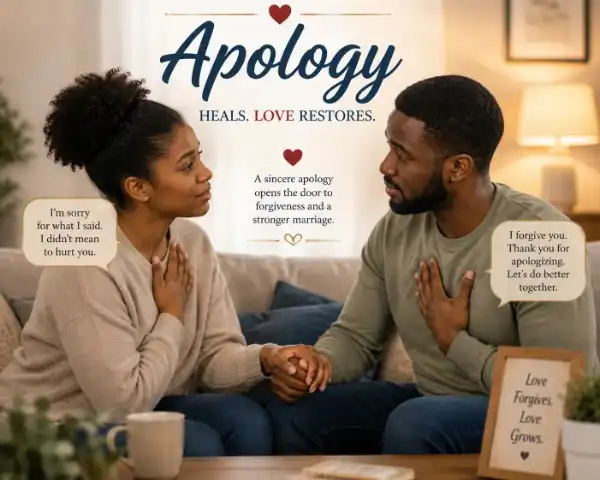
A sincere apology interrupts that cycle. It re-establishes emotional connection by telling your spouse, in effect, “You matter to me more than being right.” This is really the heart of learning how to apologize in marriage — it’s less about the specific words and more about reaching for connection instead of distance.
How To Apologize In Marriage Step by Step:
Reading about how to apologize in marriage without knowing how to put what you learnt into practice in the middle of a painful moment is a complete waste of time. Here, I want to walk you through step-by-step ways to do that.
How To Apologize In Marriage For Fast Healing:
1. Calm yourself first:
If you are still feeling bitter and flooded with defensiveness while apologizing to your spouse, your apologies will sound resentful or clipped. Take a break for some minutes and get your nervous system out of fight or flight before taking the next step.
2. Admit exactly what you did:
Regular apologies like “I’m sorry things got heated” won’t work effectively. Say something like: “I’m sorry I raised my voice and called you careless.” Precision like this communicates to your spouse that you actually understand what hurt them.
3. Take full responsibility:
Just saying no “but,” without any explanation or context, won’t work either, but taking ownership, even if only 35% of the conflict was your fault, is better. You can address the remaining 75% later, and separately.
This is arguably one of the hardest but most important parts of learning how to apologize in marriage as the right healing begins when responsibility replaces excuses.
4. Validate your spouse’s feelings:
Say plainly that you understand the extent of their hurts. For example, say “I can see why that hurt you.” This will bring more healing than any other thing you wish to say.
5. Ask for forgiveness without pressure.
Sincerely tell your partner how sorry you feel about what happened and let them know your wish for reconciliation. However, give your partner chances to arrive there at their own time. Pressuring them to forget and forgive you faster can reopen the wound.
6. Make practical changes:
After asking for forgiveness, try to identify one serious adjustment you will make from that moment and say it out loud. This will make your apology a commitment, not just a moment.
7. Rebuild trust through consistent actions:
This is where most people always skip. The truth is that a single apology can never rebuild trust. Only a repeated, visible, and consistent one does over time.
These are the practical cores of how to apologize in marriage: Note that it’s not one perfect sentence; it is a sequence that will help you move from calm to ownership and to consistent change.

What to Say During a Real Marriage Apology:
Once you understand how to apologize in marriage, it will be much easier for you choose the right words, because your attitude has already changed.
What you say when you are apologizing to your spouse matters, because there are phrases that do more real psychology than others. Below are a few recommended ones you can use, along with why each of them works.
“I understand that my words were so hurtful to you. This will show your spouse that you have moved past being defensive into genuine empathy.
“I admit I was wrong.” Direct and free of qualifiers. This is very short, but shows how accountable you are to the issues at hand.
“You deserved better.” This shows your spouse understands they are not supposed to be treated the way you did,
“I take responsibility.” This communicates to your spouse that you are not waiting for them to agree with you before you own your part.
“I want to rebuild the trust.” This is a great shift in your conversation from a single towards your relationship. This is why it helps a relationship heal fast.
As you practice these phrases, they will feel a little unnatural at first, but your consistency will help you achieve your goal over time.
Mistakes to Avoid After Saying Sorry:
Understanding how to apologize in marriage also means knowing what you also shouldn’t do after saying sorry, because bad follow-up can hurt a sincere apology.
Apologizing to your partner is only half of the process. What happen after the apology determines whether the repair works. I will advice that you avoid holding grudges once you’ve asked for forgiveness.
Avoid demanding immediate forgiveness because trust rebuilds on its own time. Also avoid repeating the same offence, avoid ignoring your partner’s emotions once the conversation is over. Healing is not processed in a single event, it takes time and process.
Never try to use gifts as a substitute for accountability. Avoid bringing up past mistakes as it will reopen wounds that have started closing. Finally, avoid neglecting your spouse’s pain with phrases like “you are overreacting, it will undo all the validations you have worked to build over time.
How Long Does Healing Take After an Apology?
This is one common question I get from most couples that visit my office, and they hope to get a specific number of days. The answer is that there are a few factors that determine the healing time:
-The gravity of the offence.
-How often and frequently similar issues occurred.
– How emotionally safe your partner feel overall.
Understand that forgiveness and trust rebuild at different time frames. Your partner may forgive you emotionally in a space of time, but may find it hard to belief that you won’t repeat the behaviour. That can take weeks or months to fully return. Both time frames are normal, and neither should be rushed.
Conclusion:
A careless word shouldn’t be a permanent wall between you and you partner. What you do next is what determines whether your marriage heals or hardens after that. Learning how to apologize in marriage is one of the most proactive skills that will help heal your relationship, especially when when learn it very well.
Don’t let resentment become the default setting of your marriage before you take action, because the longer you let unresolved hurts sit, the harder it gets to repair, and the more it gradually impacts how you see each other daily.
Every sincere apology you offered with accountability and consistent change is an investment in a safer and more connected marriage. It won’t undo all the past hurts immediately, but it will start the healing that only resentment never will.
It is never too late to start doing this well, so whether your last disagreement happened months ago, or just this morning, your sincere apology can begin to repair what silence has eroded and the sooner you start, the sooner the healing comes.
Frequently Ask Questions About How To Apologize In Marriage:
What is the best apology in marriage?
Apology works well when it’s specific, accountable and devoid of excuses. The best is when it names the exact things you did, validates your spouse’s feelings, backed up with real commitment to change not just saying “sorry.”
Knowing how to apologize in marriage as I mentioned above works better than giving a vague or defensive statement, as It helps your partner feels heard.
How long should I wait before apologizing?
There’s no specific time to do that, but ensure you are calm enough to speak without defensiveness. Waiting too long will allow resentment to settle in an have roots.
Apologizing too soon with anger will backfire and come across as insincerity. A short pause to steady yourself is far better than either extreme
Can an apology rebuild broken trust?
Yes it can, but it can’t do it alone. A sincere apology can open the door to healing, but trust can only be rebuilt gradually and through consistent repeated actions that corresponds with your words over time. Think of the apology as your first brick not the whole wall.
What if my spouse refuses my apology?
The best thing to do when your spouse refused to apologise is to give them some space and time. Their refusal often means they want to see some changes from you before they can fully accept it, not that you apology failed.
Keep on with the behaviour change you promised, and avoid pushing harder for immediate forgiveness, which usually has negative affects.