When Your Partner Shuts Down: 7 Powerful Steps Forward

If you are looking for what to do when your partner shuts down, then this post is for you. It’s a really terrible feeling sitting in silence with the person you love, seeing that they’re suffering but not being able to do anything about it.
When a loved one shuts down, it is as if you are no longer able to reach their heart or voice. The feeling you get is that you are the cause of the problem and therefore that you have to figure out a way to solve it.
Such an emotional retreat, which is also called stonewalling or silent treatment, occurs more frequently than people think. According to a study published in the Journal of Social and Personal Relationships, more than 67% of couples acknowledge that they use the silent treatment when they have a conflict.
It is one of the most excruciating communication barriers in relationships, yet it is mostly not about punishing. It’s about protecting oneself.
In this post, you will find the seven most effective steps to take when your partner shuts down, as well as expert insights to help you reconnect, restore trust, and rebuild emotional safety.
Understanding Why Partners Shut Down:
When your partner shuts down, it probably feels like a personal attack, but in the majority of cases, it is not. A lot of people emotionally pull away not because they have stopped caring, but because they have been overwhelmed. The brain treats emotional intensity as a danger, and so it initiates a freeze response that makes it nearly impossible to communicate.
So, one partner becomes anxious for connection while the other is further disengaged. This kind of emotional running after each other ends up creating more distance and aggravation. The first step on the way to healing is understanding why it happens.
Common Causes of Emotional Shutdown:
- Harsh criticism or ongoing conflict.
- Feeling misunderstood, judged, or invalidated.
- Past emotional trauma or childhood neglect.
- Being overwhelmed by a multitude of stressors (work, finances, family).
- Fear of rejection or escalation.
- Different ways of emotional expression (introverted vs. expressive).
- Lack of emotional safety or unresolved resentment.
If you see these causes, it helps you to respond with compassion rather than anger. You get ready to take wise action, and that’s when the seven powerful steps come into play.
The Psychology Behind the Silent Treatment:

The silent treatment is commonly a repercussion of self-protection. The person’s emotional system, who is the target of the silent treatment, is mostly put on a kind of defense. This doesn’t always imply that the person is quite aware of it, but the person is protected subconsciously from the emotional hurt.
One of the Four Horsemen of Relationship Breakdown, according to Dr. John Gottman, a marriage research pioneer, is his identification of stonewalling as the most significant detrimental behavior in marriage. His explanation about the act of emotionally withdrawing is that in this way, partners “soothe themselves” from the pressure, which is most likely to be the cause of the situation.
Regrettably, the partners whose spouse they emotionally withdraw from are left with a feeling of invisibility and that their love is not reciprocated.
Knowing this psychology does not justify the behavior (when your partner shuts down), however, it certainly allows you to understand the perpetrator and view him/her with empathy and not with the anger you usually feel. Let’s now delve into the practical steps that will help you get through the time when your partner is emotionally disengaged.
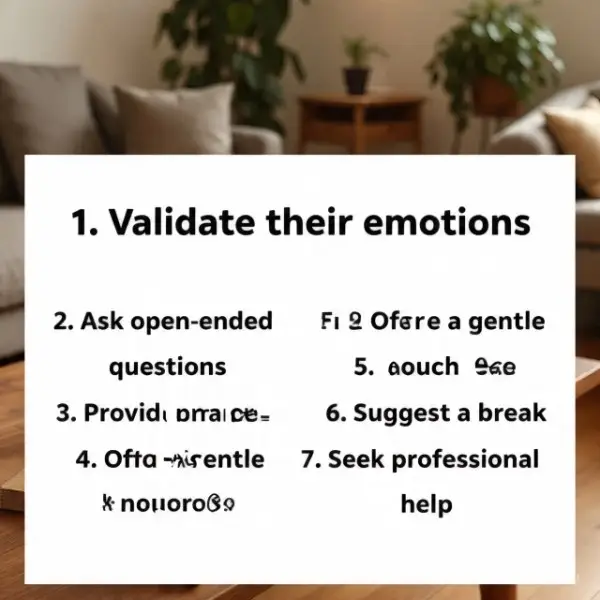
7 Powerful Steps Forward When Your Partner Shuts Down:
Step 1: Stay Calm and Don’t Mirror Their Silence:
In response to their withdrawal, you may feel an urge to do the same and refrain from talking to them as well. Nevertheless, this kind of reaction only intensifies the separation between you on an emotional level. In the situation where your partner is not willing to initiate a conversation with you, you are to keep up your composure and thus, be the emotional support for your relationship.
Relax and breathe in and out slowly. If it is necessary, sit down and be silent, but your manner of approach should be warm and friendly. Do not resort to sarcasm, sighs, or the use of cold body language when your partner shuts down.
Expert View: “Emotional regulation is contagious,” explains Dr. Sue Johnson. “One calm partner creates a safe environment, which in turn leads to more connection.”
Step 2: Create Emotional Safety Without Pressure:
When your partner shuts down, trying to coerce them to “talk now” is almost always a recipe for disaster. Instead, offer safety through your voice, patience, and bodily gestures. Putting the words “I’m here when you need me” is a way to express it, and a touch can also comfort the person and let him/her know that you are not angry.
Never resort to threats or the use of guilt. Emotional safety is achieved through love and care, not by forcing.
Expert View: “They feel unconditionally accepted and this is when they open up, not when they are pushed,” says a well-known relationship therapist, Esther Perel.
When your partner shuts down from your relationship, he or she will appreciate most a place where they are accepted rather than questioned.
Step 3: Choose the Right Time to Talk:
There is a time for everything. When a partner shuts down all of a sudden, they may not be in the right frame of mind for an immediate talk, and this action is very likely to exacerbate the problem. Be patient to let the anger subside. Sometimes it takes an hour, sometimes a whole day.
It is better to do it when you are both in good spirits and nice and calm without any kind of distraction. A relaxed moment allows the nervous system to reset, opening the door to empathy and clarity.
Expert View: “It is much easier to talk when one has calmed down and is no longer ready to defend,” asserts Dr. John Gottman. “It is impossible to have serious discussions when the body is programmed for fight or flight.”
When your partner shuts down, remaining patient is usually what opens the door that pressure keeps closed.
Step 4: Ask Open-Ended, Nonjudgmental Questions:
The moment you reconnect, why not be curious instead of angry? Do not ask a question that makes your partner feel cornered: for instance, “Why are you ignoring me?” Instead, ask politely:
- “Could you share with me what you are really feeling?”
- “Is there anything I have done that upset you?”
Those questions represent love and caring, not blame.
Expert View: “Being curious helps you to be more understanding,” Dr. Brené Brown says. With a little help from curiosity, you can still get to your partner’s heart one loving question at a time when they close off.
Step 5: Validate Their Feelings Before Sharing Yours:
One of the most powerful tools in communication is the concept of validation. Before giving an account of your emotions, recognize those of your interlocutor: “It seems to me you were very overwhelmed,” or “I understand why that was difficult for you.”
The simple act of doing this when your partner shuts down lowers the level of defensiveness and increases the willingness to open up. When your partner is emotionally shut, validation assures that you are not against them, but rather, with them.
Expert View: “To validate someone, you do not have to agree with them; you have to understand them,” says Dr. Lisa Firestone. Those couples who efficiently use validation are more likely to become emotionally connected quickly than those who keep fighting.

Step 6: Express Your Needs Without Blame:
As soon as your partner begins to participate, inform them how their quietness influences you, but do it kindly. Instead of “You always shut me out,” say “I feel lonely when we don’t talk.” The difference in wording can be the deciding factor whether your statement mends or wounds.
Don’t put out a term like “cold” or “selfish.” Concentrate on how you feel instead of pointing out their shortcomings.
Expert View: “Good communication is the result of clearly expressed needs,” says Dr. Terri Orbuch. When your partner shuts down, your being clear can be the light that leads them/back to emotional honesty.
Step 7: Rebuild Connection Through Small Acts of Love:
After silence, a large emotional talk might seem too overwhelming. Start small with any of these ideas: share a meal, go for a walk, watch a funny movie together, or send a loving text. The little things can go a long way in breaking the hard shell of the tension that is there.
When your partner shuts down, there is nothing more powerful than small demonstrations of love to let him/her know that your love is still there.
Expert View: “The emotional bond deepens with small, consistent, everyday gestures,” states Dr. John Gottman. It takes time to restore trust, but every warm gesture is a step forward.
How to Prevent Emotional Shutdowns in the Future:
Keeping a shutdown from happening in the future is mostly about creating safety and understanding habits.
Some ways to keep the connection strong are:
- Plan to emotionally check in with each other regularly, not only to discuss conflicts.
- Commit yourself to being appreciative each and every day. Being thankful is a wonderful way to help each other become more open.
- Even in a quarrel, decent voices should be used.
If the pattern of shutting down becomes a habit in the relationship, consider therapy.
When your partner shuts down, the steps to prevention involve empathy, patience, and both partners continually working on their communication skills.
How to Prevent Emotional Shutdowns in the Future:
It is largely about generating safety and understanding when habits are used to keep a shutdown from happening later. Some methods to maintain a strong connection when your partner shuts down are:
- Agree to emotionally check in with each other regularly, not only to talk through conflicts.
- Put a daily effort into being thankful for each other. Gratitude is a great tool to unlock each other.
Even if it is a fight, good manners and decent voices should be kept. If shutting down has become a habitual pattern in your relationship, consider going to therapy. When your partner is shutting down, the prevention steps include empathy, patience, and communication skills, continually working with both partners.
Key Takeaways:
- Often, a person’s emotional shutdown shows that they are scared and not that they are angry.
- If the person stays calm, it is more likely that the other person will open up; if the person puts more pressure, the other person will increasingly shut himself in.
- Along with words, timing and tone of speech are also very important.
- Silent periods followed by small rituals help regain trust.
- One of the ways to open someone’s heart is through validation rather than persuasion.
- Partner emotional disconnection to this stage is not a cause of attack but rather to find solutions together, as shown by the expert insights on the matter.
It helps you to calm down and be patient if you realize that your partner is going through the shutdown stage, and soothe him with love rather than getting angry and annoyed with him.
Conclusion:
When your partner shuts down emotionally, it can be very disorienting and lonely but it doesn’t have to be the end of the story. More often than not, it is a signal of being overwhelmed rather than being without love. The main thing is to hear what is not said, respond to it with understanding, and create the emotional safety that is needed bit by bit.
Don’t forget that patience is your most powerful weapon. Love is not just talking; it is being there for the other one, showing kindness and understanding. Partners who go through emotional shutdowns successfully can get out of the situation in a better way, with a stronger bond and a deeper understanding of each other’s feelings.
Hence, when your partner shuts down, do not lose hope. Put yourself in the brakes, use a different approach when listening, and love on purpose because it is usually in those quiet moments when words fail but love is still there that the healing process starts.
Frequently Asked Questions (FAQs):
1: Why does my partner shut down during arguments?
Usually, when your partner shuts down during disagreements, it’s not that they’re avoiding interaction with you but rather that they’re protecting themselves from being overwhelmed by their emotions.
Many individuals react with withdrawal when they are in a situation of feeling attacked, overwhelmed, or unrecognized. The shutdown they do is their emotional protection, not their refusal. Knowing what causes their silence will help you to react with understanding instead of being angry. When your partner becomes silent, you keep your cool and make the atmosphere safe emotionally, which will undoubtedly urge them to open up earlier and talk to you truthfully.
2: What should I do if my partner shuts down?
Don’t force your partner into a conversation if he or she is unresponsive. Rather, try to present a calm and understanding environment to make them feel that they are in a safe place. Pity, trust in the process, and sympathy for the other person will surely be much more effective than accusations or urging.
A phrase like, “Whenever you’re ready to talk, I’m here,” will fit into your plan perfectly. That shows the other person that you understand, and you do not ask. Allowing them to have their own moment of quiet enables emotional regulation and later real talk to happen. On the contrary, compassion and not a clash have the power to break the silence down when your partner shuts down.
Can the silent treatment be the reason for a breakup of a relationship?
Absolutely, the silent treatment as a recurring pattern in a relationship can gradually cause the loss of trust, intimacy, and emotional security in the relationship concerned. In its gradual effect, it teaches partners to disengage from each other rather than to get in touch with each other.
Yet, the way one handles it can make all the difference. It can be reversed by the very act of encountering the silence with empathy, patience, and understanding when your partner is withdrawing. Small, consistent attempts at silence can open the door to a deeper connection between the parties instead of the separation that lasts eternally.
How can we stop turning off emotionally in our relationship?
The points to check regularly, expressing your liking, and solving conflicts through calmness supply the sense of security among partners. When your partner shuts down, it is mostly caused by fright or being overwhelmed rather than the absence of love.
Developing your partner’s empathy towards you and providing a blame-free atmosphere contribute to lessening the necessity of withdrawal. The practice of those routines slowly but surely turns the experience of separation into that of connection and giving each other time into understanding, thus making partners feel equally listened to, respected, and emotionally secure.