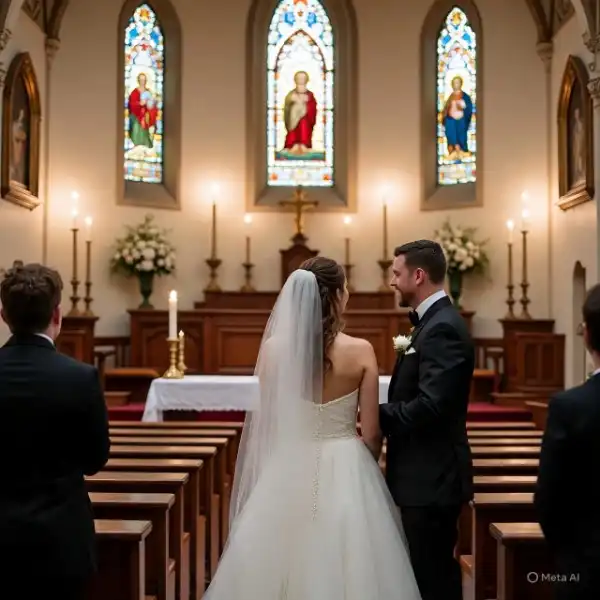
7 Fantastic Ways Of Planning A Christian Wedding Now

When Sue and Jordan walked down the aisle of the local church last spring, every detail was made not just to reflect their love for each other, but also their unique commitment to honor God in their marriage.
From the scripture reading to the hymns they selected, their wedding ceremony became an epitome of faith, family, and forever promises.
Planning a Christian wedding is not just about organizing an event, but about creating a sacred covenant celebration that stands on biblical principles, while also bringing together loved ones in joy and worship.
Whether you’re newly engaged or months into wedding preparations, this post will take you by hand and walk you through 7 fantastic ways of planning a Christian wedding that’s deeply blended with spiritual significance and personal touches.
A recent survey by The Knot shows that more than 42% of couples in America choose religious ceremonies, and Christian weddings are at the top of the list.
But the truth remains that couples are still struggling to create a balance between traditional church requirements and modern wedding trends, and often feel overwhelmed by the spiritual and logistical elements that are involved.
This guide will transform that challenge into an inspiring journey, and offer you practical wisdom from experienced wedding coordinators, pastors, and couples who’ve walked this path before you.
You will also learn how to respect your faith tremendously and create memories that will last a lifetime.
1) Understanding the Sacred Foundation When Planning a Christian Wedding:
Before we delve into logistics and decorations, successful planning of a Christian wedding, I want you to note that every wedding begins with having the knowledge of the spiritual foundation that makes a Christian wedding different from a secular celebration.
A Christian marriage is not just a cultural tradition, but a covenant made before God, and witnessed by your community of faith. Ephesians 5:25-33 describes marriage as a reflection of Christ’s relationship with his Church.
Dr.Timothy Keller, the author of “The Meaning of Marriage,” and a renowned pastor, said that Christian marriage is made to be a “mini-drama of the gospel,” where two people commit to sacrificial love that demonstrates Jesus’s love for humanity.
2) Selecting the Church and Officiant for Your Christian Wedding Ceremony
Where you will get married has the biggest impact on the rest of your planning for a Christian wedding. Although some may be attracted by exotic locations, most couples resort to the church for its spiritual vitality and available support systems.
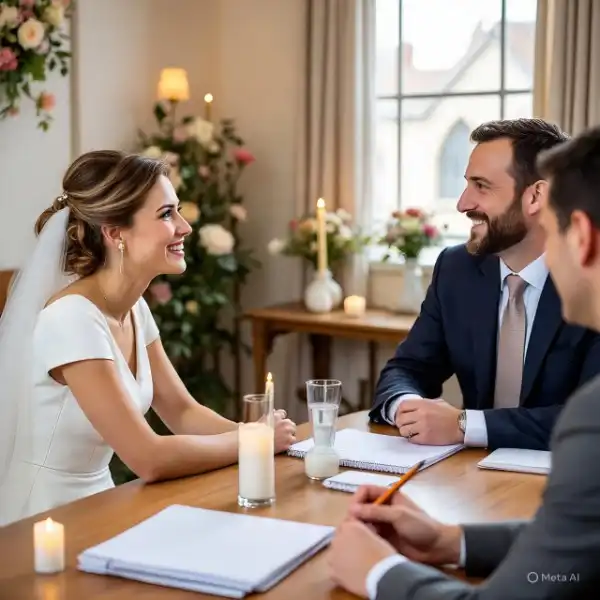
So first of all, make sure to see the pastor of your church at home, and do this about 6–12 months before your wedding day. The vast majority of them will insist on 4–8 premarital counseling sessions that include communication, finances, conflict resolution, and spiritual compatibility.
Research indicates that these sessions are a significant contribution, as couples completing them report 30% more marital satisfaction.
Should you be marrying in a different denomination, make sure to study the doctrinal requirements in great detail. Catholic, Baptist, Methodist, and non-denominational weddings are different in terms of liturgy, music, and communion.
Keep in mind that there are certain restrictions in place for decorations, photography, and practices during the performance of the sacred rituals.
3) Defining Your Biblically Themed Idea and Choosing Scriptures Relevant to It:
Planning a Christian wedding that is unforgettable and Scripture-based uses the Bible as the main source to tell the story of your unique life together.
Instead of using the most typical Christian passages as the base of your work, you should first seek, by prayer, those verses that will truly be your guide.
Many get inspired by the eight most common Christian wedding themes and Scriptures, which include 1 Corinthians 13, Ruth 1:16-17, and Ecclesiastes 4. Still, why not examine Song of Solomon 8, Colossians 3:12-17, and Proverbs 31?
The readings (processional, vows, unity, and benediction) can be the main theme of your worksheet, and you can select 2-3 passages for your readings to be simplified and to have a more profound commitment flow.
Here’s a cut-down version of your wedding timeline, with about 160 words, that still conveys the same information:
4) The Comprehensive Christian Wedding Timeline That Works:
The timeline for planning a Christian wedding is less about the spirituality being delivered immediately, but still a logistics timeline. In contrast to a secular wedding, the different preparation stages allow both the faith and the details to flow.
12 Months Before: Have a meeting with your pastor, reserve the church, select your wedding party, and get a head start on premarital counseling, making sure there is enough room for the unexpected and that the progress is steady.
9 Months Before: Create the final layout of the ceremony with the help of your officiant, pick a music that is both nice and that meets the church’s standards, book the location of your reception, and recruit a photographer who is aware of the nature of the event.
6 Months Before: Get the Christian-themed invitations made, take the register for gifts, complete your guest list, and organize the rehearsal dinner, which is usually a moment for testimonies and prayer time.
3 Months Before the wedding: Make sure that vendor contracts get your complete instructions for planning a Christian wedding, get your marriage license, and formalize all the ceremony details like unity traditions and reception flow.
1 Month Before: Conduct the rehearsal, assign the seats, verify the guest list, and get the vows ready.
5) Selecting a Christian Wedding That Enhances Worship:
Good music will set the vibe when planning a Christian wedding, though, you can’t just throw on any sappy love ballad and call it a day. You want songs that actually bring people into worship, not just into their feels.
First thing? Hit up your church’s music director or whoever’s running the show. Some churches are chill, but a ton have this secret list of “approved” songs.
No, it’s not them being killjoys; it’s about keeping the focus on worship, not just the lovey-dovey stuff. Remember, your wedding is basically a church service with a side of party.
When people are rolling in and finding their seats, keep it mellow. Instrumental hymns are always a win, go for something like “How Great Thou Art,” “It Is Well With My Soul,” or “Blessed Assurance.” ant something fresher?
Go for instrumental tracks from Chris Tomlin, Hillsong, or Elevation Worship. The younger crowd will actually recognize those, and you don’t lose that sacred vibe.
The processional? You don’t have to settle for “Here Comes the Bride” unless you really want it. “Jesu, Joy of Man’s Desiring” will always slap, but if you’re feeling modern, “10,000 Reasons” works too.
Some couples even mash up old-school and new-school tunes, which, honestly, is pretty cool if you want to put your own stamp on things and still keep it worshipful.
For those little moments like the unity candle or after reading scripture, pick songs that actually mean something.
A soloist can go with “The Prayer,” “How Beautiful,” or even “From This Moment,” but make sure the lyrics fit the worship vibe (don’t just grab a sappy love tune). And, please, remind your soloist: you’re leading worship, not auditioning for The Voice.
Recessional tunes? Time to crank up the joy. “Ode to Joy,” “Trumpet Voluntary,” or just go for an upbeat worship anthem like “Good Good Father” or “Cornerstone.” You’re married, so let’s celebrate. It’s the moment that says, “Alright, time to party (but, you know, in a holy way).”
6) Personalizing Your Christian Wedding Vows and Promises:
Writing your own vows is both terrifying and awesome. These are not just flowery words but serious promises you say in front of God and everyone you love.
A lot of churches still go with the classics: “for better or worse, richer or poorer… blah blah blah.” But honestly, those old-school vows pack some serious truth. Life’s messy, but you’re saying, “I’m in, no matter what.”
If you want to write your own, go for it, but keep it real. Mention God, promise to love sacrificially, stick together through the ugly times, and recognize you’re making a forever deal, not just a “let’s see how this goes” arrangement.
Take Jonathan, for example, he nailed it: “Emma, I vow before God and these witnesses to love you as Christ loved the church, sacrificially and unconditionally…” You get the idea. Deep, but still personal.
Pro tip: don’t go full-on Nicholas Sparks. Save the mushy poetry for your anniversary cards. The vows should feel weighty, not like you’re auditioning for The Bachelor.
Pastor Rick Warren (yeah, that guy) suggests about 70% traditional words, 30% your own flavor. Keeps things anchored, but still you.
7) Creating Your Christian Wedding Reception That Continues the Celebration:
Here’s where things can get tricky when planning a Christian wedding. You want to keep the energy up, but without ditching your values at the church door.
Not saying your reception has to be boring, please, no. Some Christian weddings go dry (no booze), especially if that’s your family’s thing or your church says so.
Others will have wine or beer, just not letting it turn into a frat party. Figure out what you’re both comfortable with, check in with your church and families, and whatever you do, make sure people can get home safely.
Music and entertainment? Yes, you can have a dance party and still honor God. Just get a DJ or band who is experienced, someone who knows not to drop anything sketchy.
Make a “do not play” list and stick to it. There’s a ton of fun, clean music out there (and no, it’s not all DC Talk or Michael W. Smith, unless you’re into that, then hey, go wild).
In the end, your wedding should feel like you are just with a little extra Jesus in the mix.
Common Mistakes to Avoid When Planning a Christian Wedding:
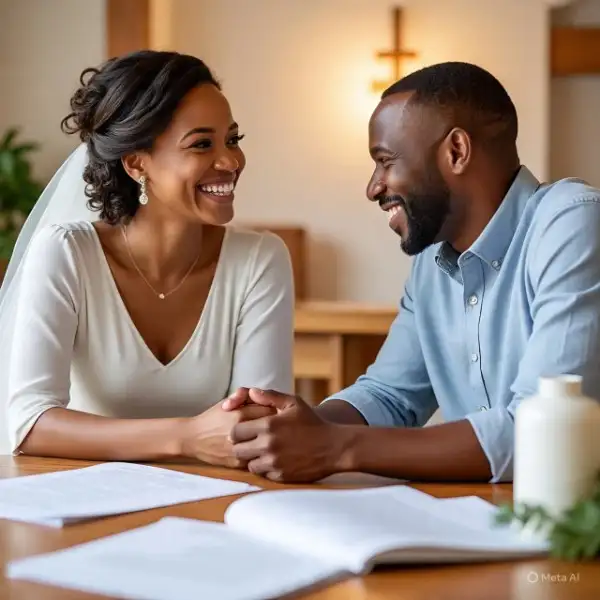
Do you know that even the sweetest couples can totally trip themselves up when planning a Christian wedding? People always think love and good intentions are enough, but honestly? There are so many random little traps waiting to stress you out or wreck your vision if you let ‘em.
- Waiting way too long to get started: Like, if you’re thinking “Oh, we’ll just start planning three months out,” you might as well ask for a wedding in a broom closet on a Tuesday. Churches, especially the pretty ones, can book up a year or more ahead, especially in spring and fall. And don’t even get me started on squeezing in pre-marital counseling last minute. That’s not prep, that’s just ticking a box so your grandma won’t panic.
- Ignoring Church Guideline: You can’t just roll in and start stapling tulle to the altar or blasting your favorite Spotify playlist. Each church has its own list of “dos and don’ts” for decorations, photographers, music, you name it. Thinking you can wing it ‘cause it’s your “special day” is a recipe for an awkward showdown with the pastor. Seriously, read the fine print and ask questions before you start dreaming up your fairy-tale aisle.
- Choosing Your Attendance Poorly: Some folks pick attendants just for the Instagram aesthetics or because “we’ve been friends since kindergarten.” But if your squad isn’t down for praying with you or actually supporting your marriage, not just your color palette…yeah, that’s gonna backfire. Go for people who’ll hype up your relationship, not stir up drama.
- Overspending To Impress Others: Social media will have you thinking you need a $30,000 bash when planning a Christian wedding or you’re somehow failing at life. Spoiler: You’re not. Going into debt to impress your cousin’s cousin is just dumb, and it goes against that whole “financial stewardship“ thing Christians talk about. Set a budget that reflects your values, not TikTok trends.
- Neglecting Spiritual Preparation: People obsess over table runners and signature cocktails, but forget to pray together or actually dig into what marriage means. At the end of the day, your table settings won’t hold your marriage together; your spiritual foundation will. Maybe swap a cake tasting for a Bible study now and then.
- Copying Everything From Pinterest: It’s cool to get inspiration, but if you just rip off someone else’s board, your big day will feel about as personal as a hotel conference room. Let your quirks and faith story show up somewhere! People remember the weird, sweet stuff that’s actually you.
- Last thing, when planning a Christian wedding, don’t forget, you’re building a marriage, not just a party. It’s wild how many couples spend more time arguing about napkin colors than talking about conflict resolution or how to fight fair. Vendor meetings are fine, but maybe invest just as much energy in learning how not to kill each other when real life hits.
Anyway, plan smart, don’t stress the fluff, and remember what actually matters when the confetti settles.
Frequently Asked Questions About Planning a Christian Wedding:
How much does planning a Christian wedding typically cost?
Can we have a Christian wedding if we’re from different denominations?
How long should our Christian wedding ceremony last?
What if our families have different expectations for our Christian?
What if our families have different expectations for our Christian?
Should we write our own vows or use traditional ones?