
9 Famous Reasons Why Marriages Lose Momentum: Do This
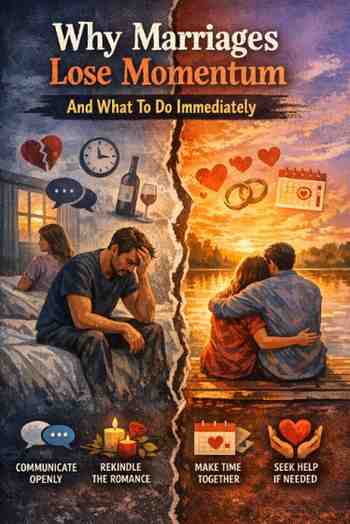
Marriages don’t break overnight. It gradually fades, so slowly, and almost unnoticed. One day, you are the best of couples; sharing your dreams, laughing, and feeling so connected. Then, suddenly, you notice something – your conversation has become shorter, and physical touch has become almost unacceptable. The spark has vanished.
Dr. John Gottman’s research shows that emotional discrimination is the leading predictor of marital dissatisfaction, not conflict. That also means that fight doesn’t destroy love, it’s the silence, the distance, and the slow drift apart.
Understanding why marriages lose momentum is the initial step towards fixing it. And the best is that knowing what to do about it can improve your relationship faster than you think.
Let me walk you through the real reasons why marriage loses momentum, and then show you practical ways to rebuild what feels lost.
Reasons Why Marriages Lose Momentum:
1) When Daily Routines Replace Quality Connection Time:
Deborah and John were a perfect couple for the first 3 years together. They traveled and spent the weekend exploring farmers’ markets and trying new restaurants.
Then a promotion took place, the kids started coming, and suddenly their life became a series of repetitive tasks (wake up, get kids ready, work, dinner, bedtime routine, repeat). A renowned relationship researcher John Gottman found that couples who maintain weekly “state of union” meetings always enjoy 67% higher satisfaction.
The problem is not the routine itself, but when the routine completely replaces intentional connection.
Discovering when marriage loses momentum begins with recognizing how living your marriage in autopilot mode can destroy intimacy.
When your conversations now become transactional, like “Did you pay the electric bill? etc, you stop being lovers, but roommates managing a household corporation.
Solution: The solution requires intentional disruption. Plan to have a weekly date night as a non-negotiable appointment. Create morning rituals that can cause genuine connection, like 5 minutes of eye contact and conversation over a cup of tea. These can reset your emotional baseline.
2. Emotional Neglect Slowly Replaces Deep Connection:
When your relationship was still young, emotional attention was effortless. You listen, you ask questions and you reply well. Over time the daily responsibilities take over, and the emotional connection becomes optional and no longer essential.
This is one of the strongest answers to why marriages lose momentum.
Dr. John Gottman describes this as “turning away from bids.” When your spouse seeks attention and you ignore it, it weakens the connection, even in small ways.
Example: When your partner says, “You won’t believe who I saw today,” and you keep silence or respond with a distraction. These moments accumulate.
A simple template to help you fix this is intentional engagement.
For instance: When your spouse speaks, pause for a while, make eye contact, before you respond with curiosity. Say something like, “Tell me more about it.”
Consistency here will help you rebuild emotional safety faster than grand gestures ever could.
3. Lack of Appreciation Creates Emotional Distance:
One of the main reasons why marriages lose momentum is unarticulated gratitude. When appreciation disappears, it breeds resentment quietly.
One of the famous relationship research studies once said that couples who express appreciation daily are significantly more satisfied in their marriages. Don’t be among those who assume that their partner knows you value them. Say it.
“I appreciate how hard you work for this family.”
“It meant a lot to me.”
These words may seem insignificant, but they carry emotional weight.
4) Communication Becomes Functional Instead of Meaningful:
This may shock you: Many couples talk, but they don’t truly communicate. Their conversation centers only around bills, children’s responsibilities, and jobs, but not about their feelings, dreams, or fears. This shift summarizes why marriages lose momentum.
Real communication requires vulnerability.
Instead of only asking “How was your day?”, say:
“What stressed you the most today?”
“What made you feel good today?”
This will create emotional depth instead of surface-level interaction.
If your communication feels broken already, professional support can help. Many couples see transformation through structured programs.
You can explore a trusted marriage counseling program that will provide step-by-step communication frameworks that will help you rebuild connection effectively.
5. Unresolved Conflicts Quietly Build Walls:
Having conflicts in your marriage is normal and doesn’t mean your relationship is dying. The most dangerous is ignoring conflicts. One of the major reasons why marriages lose momentum is unresolved tensions that are left unaddressed.

Over time, small issues will become emotional barriers. So instead of avoiding conflicts, learn how to repair them.
Here’s a repair template:
Say “I felt hurt when that happened, and I’m not blaming you, I just want us to understand each other better.”
This will remove defensiveness and invite connection. According to the Gottman Institute, successful couples are not conflict-free, but are repair-focused.
6. Physical Intimacy Gradually Fades Away:
Physical closeness is beyond sex, and It comprises touch, hugs, holding hands, and simple affection. When physical intimacy fades, it usually results in emotional distance, which is another key reason why marriages lose momentum.
From research, we found that physical touch triggers the release of a hormone known as oxytocin (bonding hormone that strengthens emotional connection
If intimacy has disappeared, or been reduced, start small.
Learn how to hold hands more often. Sit closer. Hug longer.
Rebuilding intimacy doesn’t start in the bedroom, it starts with your daily connection.
7. External Stress Takes Over the Relationship:
Life pressures like money, work, and children, can gradually dominate your marriage, and make you become co-managers instead of partners. This dynamic strongly explains the reason why marriages lose momentum.
The key shift is moving from “me vs you” to “us vs the problem.” Whenever you are faced with stress, say something like:
“We’ll figure this out together.”
This simple mindset shift will strengthen your unity. And if the stress has deeply affected your relationship, structured guidance can help restore balance. Many couples have benefited from professional guardianship offered through marriage counseling programs that focus mainly on rebuilding teamwork and emotional resilience.
8. Personal Growth Stops Within the Relationship:
People grow. But most times, marriages don’t grow with them. When couples stop evolving, their relationship becomes stagnant. It is this stagnation that contributes to why marriages lose momentum.
Healthy marriages require continuous growth from both individuals and together.
Ask yourself this question:
“What kind of partner am I becoming?”
“What kind of marriage are we building?”
Growth keeps your relationship alive.
9. Taking Each Other for Granted Becomes the Norm:
Familiarity is very dangerous, and when you assume that love will always be there without effort, your connection begins to weaken. This is one of the most painful truths behind why marriages lose momentum.
The truth is that love is sustained by daily action and not history.
Simple habits can make a difference:
Saying “I love you” intentionally.
Checking in emotionally.
Prioritizing your partner every time over distractions. These actions may seem small to you, but they can rebuild what complacency has destroyed.
Real-Life Story: When Momentum Was Lost, and Found Again:
A couple married for 7 years nearly came close to emotional separation. There was no betrayal, no dramatic conflict, or fight, only distance.
They described their relationship as “existing, not living.”
At one time, they discovered the main reasons why marriages lose momentum were due to emotional neglect and routine.
They immediately swing into action beginning with small changes.
- They planned to have 20-minute daily conversations.
- They expressed appreciation daily.
- They reintroduced weekly shared activities.
Within 3 months, things changed, and they reported feeling “like we found each other again.”
The lesson is simple: momentum can be rebuilt.
Conclusion: Momentum Can Be Rebuilt, But It Requires Intentional Action:
Understanding why marriages lose momentum is just the first necessary step, the real work is to be consistent, take deliberate actions that rebuild connection, so you can reignite the passion that brought you together.
Every relationship goes through periods of disconnection, the difference between marriages that stand firm and those that dissolve is related to how couples respond to these inevitable challenges.
You have invested so much into this relationship, and you have built a life together, created memories. That investment is worth fighting for. These 9 reasons I outlined in this post are not a death sentence, but wake-up calls.
Recognition will provide you the opportunity for correction before you drift too far apart to be found again.
Take the Next Step Toward Rebuilding Your Marriage:
Don’t allow another day to pass and continue to live as roommates instead of soulmates. Professional marriage counseling will provide the tools and the support you need to successfully navigate these challenges.
Thousands of couples have used the evidence-based therapy approaches to restore connection and rebuild passionate relationships
Start your connection journey today with professional marriage counseling. Choose from licensed therapists who specialize in couples therapy.
Your marriage deserves expert guidance, and you also deserve the partnership you have always dreamed of.
Take action now, because tomorrow’s connection starts with your decision today.
Frequently Asked Questions About Why Marriages Lose Momentum:
Why do marriages lose momentum after having children and how can couples prevent it?
Having children automatically changes the relationship dynamics, as couples’ focus shifts from connection to childcare responsibilities.
Research has presented evidence that 67% of couples experience a tremendous decline in relationship satisfaction during the first 3 years of parenthood.
To prevent this from happening, you must create child-free connection time, divide parenting responsibilities equitably, and be ready to prioritize your partner relationship with your parenting role.
Can a marriage regain momentum after years of emotional distance?
Yes, it can. While restoring momentum in marriage requires intentional effort from both of you, studies show that intimacy can still be restored even when the disconnection has taken so long.
The core factors include that both of you get committed to change, seek professional guidance when necessary, and consistently show up for your relationship through small daily actions that aid in rebuilding trust and connection.
What are the early warning signs that explain why marriages lose momentum before couples notice?
Early red flags often show subtly: you may notice your conversations becoming primarily transactional, your physical affection reduced, increased irritability, or preferring your work or hobbies over spending time with your partner.
However, if you recognize these patterns on time (within the first 6 months of the emergence) you will have higher success rates in reversing loose momentum.
How long does it take to rebuild momentum in a struggling marriage?
There is no specific timeline, as it varies based on relationship history, and your commitment level. However, relationship experts suggest that you can see meaningful improvements within 3-6 months of intentional effort.
This includes daily connection rituals, active implementation of new communication patterns, and weekly therapy sessions.
Restoring deep intimacy and passion may take 12-18 months, you could experience hope and renewed connection earlier as you go through the process.