15 Forms Of Marriage That Are Actually Stunning

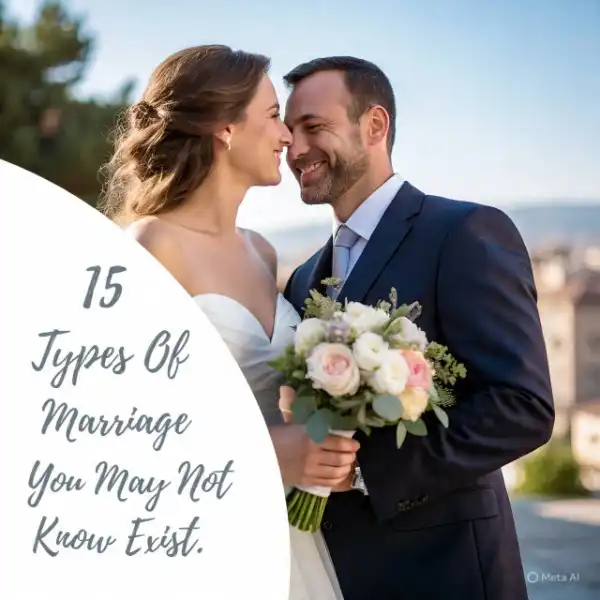
Marriage has been at the center of human society, shaping and being shaped by various aspects of life, including culture, religion, and time. Even though love is still the common ground for all marriages, the world’s varieties of marriage display an incredible range of different customs, beliefs, and laws.
Knowing different forms of marriage not only broadens our understanding of worldwide customs but also shows how people perceive commitment and family. The evolution of marriage throughout the world’s history, from the sacred rituals of primitive people to the current juridical structures, is as fascinating as it is complicated, a mirror to humanity’s desire for connection and belonging.
Different Forms Of Marriage You May Not Know Exist:
1. Monogamy, The Most Common and Traditional Form
Among all the different forms of marriage, monogamy is most likely the one that is the most acceptable in Western culture.
It is a relationship between two persons who promise to one another that they will be faithful to each other for the rest of their lives; thus, love, loyalty, and companionship are the main values. Not only are these forms of marriage culturally prevailing, but it is also legally binding in a great number of countries.
What makes monogamy wonderful is its emotional aspect, a connection that grows stronger each day, trust and common experiences being the foundation. A large number of religions and moral systems view monogamy as the most sincere expression of oneness in love, particularly stressing the holiness of “two becoming one.”
2. Polygamy, One Partner, Multiple Spouses:
Polygamy is one of the forms of marriage that has a long history and can be found in many cultures of Africa, Asia, and the Middle East. Here, a person, usually a man, is allowed to have more than one wife, all at the same time.
Even though faced with rejection or opposition in some societies, polygamy is historically rooted in customs that focus on genealogies, reproduction, and material gain. It was commonly viewed as a means of keeping up family honor or giving safe refuge to widows.
However, today, numerous countries have put a stop to this practice either by law or through complete abolition and have shifted their emphasis to relationship equality and mutual consent.
3. Polyandry, One Woman, Several Husbands:
One of the least known forms of marriage is polyandry, which means a woman marries more than one man. In places such as the Himalayas of Nepal and Tibet, where the communities are secluded, this type of association is thought to be a solution for environmental, friendly, and economical issues.
In a society with a shortage of land or resources, polyandry acts as a way to stop property disintegration and guarantee the survival of the collective family unit. Although it is scarcely found, it points out that social and ecological factors determine the human bond in such a way that there are different relationships that people form.
4. Group Marriage, A Collective Commitment:
The idea of group marriage, although rare, is one of the most fascinating types of marriage wherein a group of several men and women become one marital family.
Every member has the same rights, obligations, and responsibilities towards each other and the children that are biologically theirs. The theme of this organization revolves around the annihilation of possession and the promotion of a cooperative lifestyle.
The community is the main topic, and through the phenomenon of group marriage, especially those of the so-called utopian communities, they have been able to recognize the connection between freedom, equality, and emotional intimacy of the group relationships, despite them often being blamed for their complexity.
5. Common Law Marriage, Marriage Without Ceremony:
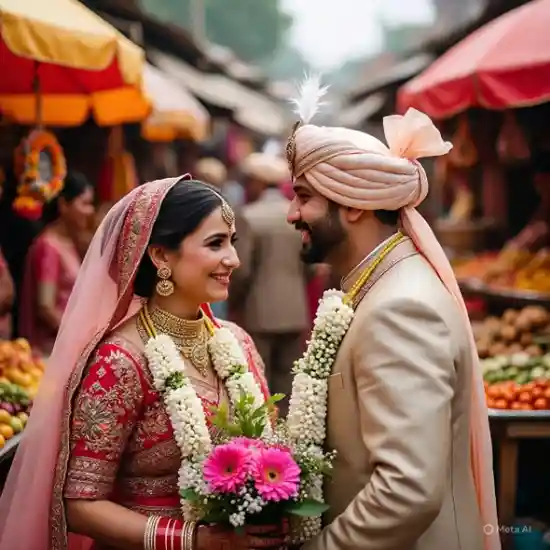
Common-law marriage is one of the forms of marriage that is quite different from others due to its minimalistic nature. It is a union of two people who cohabit for a long time and appear to be married without going through a legal formalization or registration.
Partners in such a relationship in some regions may be considered legal spouses and enjoy the same rights as those in officially registered marriages.
Its main feature is that it sacrifices the external aspect of the marriage for the inner side, a proof that faithfulness and love do not necessarily require a public demonstration.
6. Arranged Marriage, Tradition Meets Partnership:
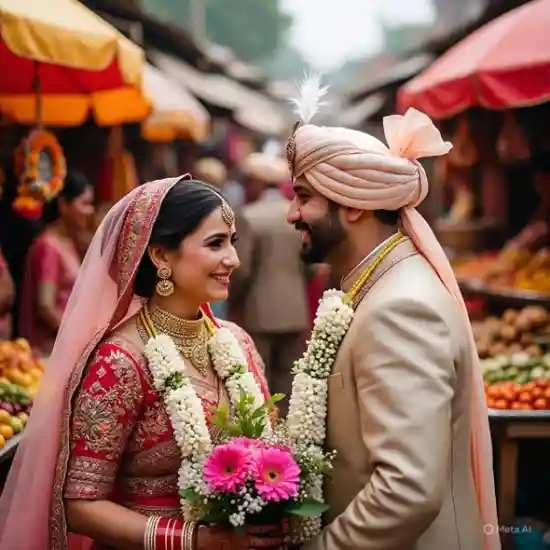
The system of arranged marriage is still very much alive and heavily relied upon in the likes of India, Pakistan, and the Middle Eastern countries. Families here not only decide the choice of spouses but also select potential candidates by weighing factors such as compatibility, social class, and similar values.
There is a great deal of misconception around this type of marriage in the Western world, whereas many arranged marriages succeed on the grounds of respect and love developed over time.
The present-day model of this age-old practice combines the aspects of culture and personal preference, allowing couples to meet and say their consent before marriage.
7. Love Marriage, Choice From the Heart:
Unlike arranged marriages, love marriages are built around the core of an emotional bond and individual decision.
Among different forms of marriage that exist today, it largely stands as one where the power of decision lies with the individuals concerned; no one chooses but the two people themselves, and that out of love, not obligation.
Love marriages operate on the basis of compatibility, friendship, and common dreams. At the same time, opponents contend that the lack of stability inherent in love marriages is due to the absence of the support given by traditional families.
Yet, the idea of a love marriage in this global village is synonymous with freedom, which means one has the liberty to decide his or her fate based on love and common goals.
8. Child Marriage, A Cultural and Legal Dilemma:
The topic of child marriage is taking center stage among different forms of marriage where one or both parties are underage.
The phenomenon of marrying off children still goes on, mostly in remote villages and based on old traditions, despite the various international initiatives to end it.
Some societies see it as a safer way of making friends whom you can trust, while others say it’s done to bring pride to your family, but the truth is that such marriages deprive the little ones of their rights and education, thus putting restrictions on their future, which is the reason why all the more global institutions and religious leaders disapprove of it.
The gradual campaigning and schooling are the effective means we have to eventually rid ourselves of this evil practice.
9. Ghost Marriage, Connections After Death:
One of the rarest and most enigmatic forms of marriage is ghost marriage, a ceremony in which one or both of the partners is deceased.
This kind of marriage, which is found in ancient China and some African tribes, is intended to keep the family lineage going or to satisfy the ancestral spirits.
Though this may sound bizarre to the outer world, these forms of marriage actually are a way to communicate with the spiritual world and express the belief that love and responsibility even go beyond death.
Ghost marriage is an example of how different cultures can view the same concept of commitment after death.
10. Levirate Marriage, Marriage as an Obligation:
Levirate marriage is a very ancient marital type that can be traced back to traditional societies such as ancient Israel and parts of Africa. The practice involves a widow marrying her deceased husband’s brother, so that the family line of the dead man can be kept.
Among the forms of marriage, this kind of marriage had an idea behind it to both secure the widow’s social position and to keep the system of inheritance going.
Though now it is mostly out of use, there are still some rural places where this custom is practiced because there the loyalty to the extended family is still very strong. The practice allows marriage to be viewed as more than just love, as the bond is also a duty of the family.
11. Sororate Marriage, Marriage to the Sister of a Deceased Wife:
This type is very similar to the one mentioned above, as sororate marriage is a case when a widower marries the sister of his deceased wife.
As one of the older forms of marriage, it was meant to keep the connections going between family units and also provide the happiness and security of the children left behind. The arrangement served as a bridge and emotional support for the families, and thus, the kinship relations grew stronger.
Though it is hardly ever practiced nowadays, some tribal and indigenous groups that put a high value on the extended family network rather than on each individual’s choice still acknowledge it.
12. Same Sex Marriage, Equal Rights in Love:
The subject of same sex marriage has become the most disputable and the most revolutionary in the entire history of marriage.
Moreover, it gets support from law in such countries as the United States, Canada, and some European countries, making two people of the same sex officially united in love and commitment. The introduction of this form of challenge brings forward the issues of equality, liberty, and human rights.
Those who favor this type of relationship say that love is the same for everyone and should be acknowledged regardless of gender. The legalization of same, sex marriage in the likes of the United States, Canada, and some European countries represents a major step forward in the inclusivity of marriage as an institution.
13. Temporary Marriage, A Contracted Union:
Temporary marriage or Islamic Nikah Mut’ah is a unique marriage type that depends on an agreed-upon time limit by the couple. In effect, it is a time-bound marriage contract sanctioned mainly within a few Muslim sects.
The arrangement builds the basis for partnerships and permits intimacy for the time stipulated. Opponents often challenge the authors of such a contract on the issue of morality, while they are convinced it is a flexible way of meeting human needs within religious rules.
The issue of temporary marriage reveals different perspectives on balancing faith, law, and emotion among societies.
14. Civil Marriage:
The Legalization of Love Civil marriage is a non-religious or secular form of marriage whereby the ceremony is conducted by a government representative instead of a clergy member. It offers legal rights for both partners, such as ownership, inheritance, and parenting rights.
Civil marriages can be an option for couples of different faiths or those who want a neutral, non-religious ceremony. Thus, they are proof of the state’s involvement in making personal unions legal and giving individuals their rights under the law.
15. Open Marriage, Re, Defining Commitment in the 21st Century:
Among the contemporary forms of marriage that receive the most attention is open marriage.
The partners in such a relationship consent to separately seek emotional or sexual bonds with others, but are at the same time committed to each other. Despite being a controversial topic, the changes to autonomy, communication, and freedom in relationships are reflected in this view.
Proponents claim that openness in an open marriage strengthens honesty and encourages self-awareness, whereas opponents think it is a betrayal of traditional faithfulness.
Whatever the case, the thoughtful choice of an open marriage is a reflection of the human bond’s gradual transformation in a world where love can take different shapes.
The Cultural and Psychological Dimensions of Marriage Forms
Variations in marital forms are not merely social customs, but they reflect how human beings understand intimacy, power, and responsibility. Community-centered cultures typically structure marriages to empower the community through the marriage, while individualistic societies tend to focus on the fulfillment of the individual.
Psychologically, every form has a different impact on the emotional side of the relationship; monogamy encourages exclusivity, polygamy is a challenge for fairness, and love marriage is the leading concept of emotional autonomy. In fact, these differences indicate that marriage is as much about one’s as it is about a partnership.
Religious Influence on Different Forms of Marriage:
Religion remains a significant factor in determining the different forms of marriage across the world. For the most part, Christianity advocates monogamy; Islam permits polygamy in a few restricted conditions; the Hindu tradition, at least initially, embraces arranged marriage, and native religions often have ceremonial unions connected to nature or ancestors.
Apart from the methods of marriage, these religious systems dictate not only the physical but also the moral and spiritual bounds of love. Religious teachings are still highly influential in shaping laws, customs, and expectations of the families of marriage all over the world.
Legal Recognition and Global Trends:
In today’s society, governments are getting more and more involved in the regulation and recognition of certain forms of marriage. Polygamous and temporary marriages are illegal or hardly legally recognized, whereas most countries accept monogamous and civil marriages.
On the other hand, this is the reason why most debates concerning equal rights and human rights at the international level are centered on the legal recognition of same, sex marriages.
The change towards more inclusiveness and consent from the two parties is indicative of a bigger change that marriage is not only a social contract but also an ever-changing way of expressing human dignity and freedom.
Marriage as a Mirror of Society:
The most preferred forms of marriage in any culture work as a mirror, reflecting that society’s core values.
Those societies that perceive stability as their main value system put emphasis on the idea of commitment that lasts for a lifetime; in contrast, ones that consider flexibility as their greatest asset are open to such forms as temporary or open relationships.
The couples are also influenced by urbanization, globalization, and technology, thus they are able to navigate through changing expectations and make informed choices about marriage. Interfaith or intercultural marriages being more popular than ever is one of the proofs of traditions merging and love constantly finding new ways to adapt.
Conclusion:
Knowing different forms of marriage can lead to a better understanding of the human experience in its entirety. A community’s view is very much evident in each of its forms, whether those are based on religion, necessity, or feeling.
No matter if it is past or present, marriage is still the deepest and most significant promise humanity has made to each other, to share life, love, and destiny.
With time passing by and the world always changing, not only are new interpretations of marriage going to be made, but one thing will still remain true: marriage, in all its forms, is and has always been the closest to our desire for connection, belonging, and love.
FAQ 1: What are the most common forms of marriage in the world?
The main forms of marriage around the globe are monogamy, polygamy, and arranged marriage. Monogamy is the most common of them all in Western societies and in many legal systems, where it is a key requirement.
It is more common in parts of Africa, Asia, and the Middle East, this is because people follow their cultural and religious traditions. Arranged marriage is popular in South Asia. This tradition happens when families select partners for their children after considering social compatibility.
These three types of marriage reflect cultural diversity, spiritual beliefs, and social norms around the world. While love marriage is becoming more popular, traditional marriage patterns remain strong. Views on love, family, and commitment vary by generation and culture.
FAQ 2: How do different religions influence forms of marriage?
Religious beliefs play a big role in shaping marriage traditions. A monogram is common among Christians, as it is seen as a long-term union. In Islam, polygamy is permitted under certain fair conditions.
Hinduism supports arranged marriages based on the idea of a harmonious family. Buddhism emphasizes personal morality over societal norms, giving its followers more freedom in their choices.
Some “primitive” religions focus on natural or ancestral ties during wedding ceremonies. Religions often have set out rules for marriage responsibilities, gender roles, and the seriousness of vows.
Interfaith forms of marriage are becoming more prevalent in our world today, as they allow partners to unite spiritually, as well as respect their individual values, like love and personal choice.
FAQ 3: Are these different marriages recognized legally everywhere?
Not different marriages in any society are legally recognized by all societies. The legality of recognition is based on national laws, cultural practices, and human rights considerations. In most areas, monogamy and civil marriage are usually recognised as legal.
Nevertheless, several governments prohibit or do not recognize polygamy, polyandry, and temporary marriages. Lesbian, gay, bisexual, and transgender (LGBT) marriage is allowed in many places, but there is still resistance in some.
Common law marriages’ acceptance is determined by the local jurisdiction and depends on whether certain conditions are met. Legal recognition leads to rights such as inheritance, taxes, and parental authority. Hence, it is essential to be aware of the local marriage laws before taking any marriage based on culture or religion.
FAQ 4: What influence did modern relationships have on the traditional form of marriage?
Modern society has changed traditional marriage mainly through three factors: globalization, technology, and changing values. Now, partners look for in their relationship an emotional bond, gender equality, and personal development rather than societal expectations.
The increase in love and civil marriages is a clear indication of the trend towards independence. The cultural diversity of partners has been tremendously widened due to the popularity of online dating services.
The striving for gender equality has also altered the marital roles; thus, the importance of sharing decisions and responsibilities has been emphasized. Furthermore, more and more people accept both heterosexual and homosexual marriages, thus leading to new conceptions of commitment and participation.
Even though marriage has undergone various changes over the years, it remains a universal symbol of love and partnership, which are constantly evolving along with human experiences and emotions.