5 Christian Love Languages Every Christian Must Know Now:
Love is the foundation of every marriage in general and Christian marriage in particular, yet many believers are not very sure of how to express or receive love effectively in their relationships and communities.
Understanding what Christian love languages entails will change how you connect with God, your families, and those around you.
These divine communication pathways are based on biblical principles and offer great insights into how we can love better and also be loved the very way God designed it to be.
By fully understanding these spiritual expressions of affection, Christians will experience deeper intimacy in their relationships and reflect Christ’s love better and more authentically to people and the world in general.
What You’ll Learn from This Guide:
In this guide, you will explore Christian love languages and it will equip you with practical tools to:
- Fully understand your primary Christian love languages and those of others.
- How can you apply these biblical principles to strengthen marriages and family relationships?
- Enhance your spiritual connection with God through devotion and personalized worship.
- Establish strong Christian community bonds by understanding different love expressions.
- Avoid those pitfalls that destroy effective love communication.
- Tackle your challenges when partners and family members may love languages.
- Create systems for implementing these principles in your daily Christian life.
Understanding Christian Love Languages: A Biblical Foundation:
Christian love languages represent the very ways we give and take love naturally, based on biblical truths and Christ’s teachings. Unlike the secular love languages, Christian love languages are fully based in the scripture and are tailored to please, God and also strengthen human relationships.
These divine communication methods enable Christians to comprehend that love is never a one-size-fits-all, but shows in different ways according to how God designs.
These divine communication methods help believers understand that love isn’t one-size-fits-all but manifests differently according to God’s creative design.
Understanding Christian Love Languages: A Biblical Foundation:
Christian love languages represent the very ways we give and take love naturally, based on biblical truths and Christ’s teachings. Unlike the secular love languages, Christian love languages are fully based in the scripture and are tailored to please, God and also strengthen human relationships.
These divine communication methods enable Christians to comprehend that love is never a one-size-fits-all, but shows in different ways according to how God designs.
The concept stands upon what Apostle Paul wrote in 1 Corinthians 13. There, Paul described the characteristics of love and Jesus’s commandments to “love one another as He has loved us.
Christian love languages understand that love is the strongest and remains constant, yet it can be expressed differently among people.
Accepting this principle has prevented misunderstandings and has also helped believers love each other more effectively as well as create stronger marriages, families, and church communities that demonstrate Christ’s love to us.
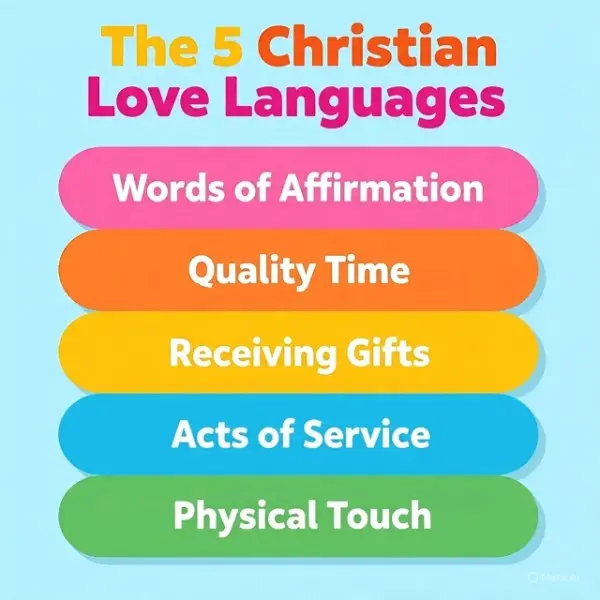
The 5 Essential Christian Love Languages:
1. Words of Biblical Affirmation:
Word of Biblical Affirmation is the love language of Christians that focuses so much on verbal expressions and is rooted in Scripture and godly encouragement. People with that type of love language feel much love when they receive compliments that are based on faith-affirming conversation, and spiritual encouragement.
They enjoy it more when they hear that their actions reflect Christ’s character and appreciate it when people acknowledge God’s work in their lives. This live language goes beyond simple compliments, but includes scripture sharing and prayer spoken out loud and prophetic encouragements.
These Christian believers usually demonstrate their love through biblical exhortations, encouraging words, and testimonies that uplift others’ faith, to create an atmosphere of mutual edification and spiritual maturity.
These believers often express love through encouraging words, biblical exhortations, and testimonies that build up others’ faith, creating atmospheres of spiritual growth and mutual edification.
2. Acts of Christian Service:
This is the kind of love language where someone feels most loved through practical demonstration of selfless actions and Christ-like services. People with this very type of love language see any help you render to them as a profound expression of love, more especially when it is done with a servant’s heart, just like Jesus did.
They feel more loved by people who feel their needs and choose to render help to them, even when they did not ask for it. This goes far beyond just helpfulness, but includes acts empowered by Christian love, like assistance with church ministries, preparation of meals during hard times, and most especially sacrificial giving of both resources and time
People whose love language is an act of Christian service naturally love to serve others, see practical help as love and worship demonstrations, and create communities characterized by mutual care and Christ-like services.
3. Receiving Godly Gifts:
This is precisely another Christian language of love where someone feels loved through receiving presents given with spiritual significance. Significance and intentions. Contrary to materialistic gift-giving, this type of love language accentuates spiritual consideration like ministry items, or tokens that represent shared faith activities.
Those believers who have this love language appreciate it when others remember important spiritual milestones, give them gifts that encourage their steps with God, or present them with things that reflect personal spiritual interests.
The ones that express this love language usually give spiritually significant gifts that show a deep knowledge of others’ faith journey, and create a bond through physical expression of spiritual consideration and care.
4. Quality Spiritual Time:

This is languages of love that focus on having undivided attention during interactions of faith or meetings. People who display this type of language feel more loved when people choose spending more time together more than anywhere else, and especially in activities that strengthen spiritual bonds.
It also includes Bible study, worship, shared prayer, and deep conversations about life and faith. They enjoy presence and prefer authentic connections through spiritual fellowship.
Trying to distract them during these times can hurt them so much, and they naturally create opportunities for spiritual connections and prefer relationship activities that bring others closer to God. This creates communities filled with genuine fellowship and spiritual intimacy.
5. Physical Touch with Purpose:
Physical touch with purpose is the type of love language where people feel loved through physical contact that respects biblical boundaries and expresses godly affection. This includes holding hands during worship, or celebratory physical expressions during spiritual victories.
These ones interpret touches as powerful communication of support and spiritual connection. They show their love through biblical physical affection like embraces of encouragement or laying on of hands that convey God’s comfort.
This love language relates to touches that minister healing, strengthen spiritual bonds, and provide comfort, while respecting biblical guidelines for appropriate physician expression within certain contexts and relationships.
Comparison Table: Christian Love Languages vs. Secular Love Languages:
| Aspect | Christian Love Languages. | Secular Love Languages. |
| Foundation. | Biblical Principles and Christ’s examples. | Psychological research and human observations. |
| Purpose | Glorify God while strengthening relationship. | Improve human relationships and satisfaction |
| Expression. | Filtered through scriptures and spiritual wisdom. | Based on personal preferences and cultural norms. |
| Growth Focus. | Spiritual Maturity and Christlike character. | Emotional fulfillment and relational satisfaction |
| Community Impact. | Build kingdom-minded serving communities. | Enhances individual relationship experiences. |
| Accountability | Accountable to God and biblical standard. | Accountable to personal values and partners |
Common Mistakes Christians Make with Love Languages:
Assuming Everyone Shares Your Primary Love Language:
One of the common mistakes people with love language is that they mistakenly assume that people feel love the same way they do. This leads to well-intentioned yet ineffective love attempts.
Any believer with the primary language of Acts of Christian Services may always serve others and neglect verbal affirmation or quality time that others need more. This assumption usually causes frustration for both parties, thereby hindering relationship growth.
Neglecting Spiritual Growth Through Love Expression:
Some believers focus only on the practical details of love languages and miss opportunities for spiritual development. They might perform services without connecting them to their faith journey or allow God to work through these expressions.
This causes Christian love languages to look like mere techniques rather than spiritual disciplines that draw us closer to God.
How To Implement Christian Love Languages in Different Relationships:
Marriage and Christian Love Languages:
Christian marriages will succeed better when everyone understands each other’s love languages and still maintains biblical principles. Men can love their wives as Christ loves the church, through their specific love language, and wives can honor and support their husbands through structured love expression. This will create marriages that show God’s design as well as meet individual emotional needs.
Communication will become better and more effective when couples understand how to better express love in the ways their spouse understands and will receive it best.
Regular conversations about love language are supposed to prevent misunderstandings and foster stronger intimacy. Couples need to pray together also about how to clearly express Christ’s love through their different love languages.
Parent-Child Relationships:
Parents can transform their relationship with their children by simply identifying their children’s love languages one by one and adapting their parental approaches effectively. A child who prefers Words of Biblical Affirmation needs different love expressions than the other who prefers Quality Spiritual Time or Acts of Christian Service.
This approach enables parents to discipline their children better while building stronger family bonds. Children will learn to appropriately express their love while acknowledging that love has many valid expressions within biblical boundaries.
Church Community and Fellowship:
It will be very easy for the church leaders and members to create more loving communities by understanding the differences in Christian love languages that the congregations have. Some members feel loved most through service opportunities, while others need verbal encouragement or unity fellowship time.
In small groups, and ministry teams, it will be much easier for church leaders to introduce different love language expressions into their community life, to ensure everyone feels loved and valued according to their unique design.
Conclusion:
The love languages of a Christian allow a relational shift with the individual in question—God, spouse, family, and church. These concepts are not a set of tools for improving relationships. They are, rather, spiritually based ways of engaging in the love of Christ as revealed in the Bible.
We are also able to ‘quarterback’ the love languages of each spouse to nurture marriages that are true to the intentions of the heart of God, and families that are fully alive in their faith, while also helping the church to fully express that love in a form that is observable to the world as genuine Christian love and unity.
The relationship that you have with God and with other people is action-oriented and needs to be taken today. Do not allow any more time to be wasted while you are functioning at a lower capacity in the eyes of God about the relationships you have.
First, get clear what your dominant Christian love language is, and what the Christian love languages of your people are. As the case always is, the journey of a thousand miles about love languages begins with one person. Invest that one week with that one person, and speak in their language of love.
The impact of your love in that week alone can be profound in all the relationships that you are in as well as in your mission for Christ.
| Area of life. | Without understanding Christian Love Languages. | With clear love language. |
| Marriage. | Miscommunication, unmet needs, spiritual disconnect. | Deeper intimacy, effective expression, and spiritual unity. |
| Parenting. | Generic approach, missed connection, frustration. | Tailored discipleship, stronger bonds, effective guidance. |
| Church Community. | Surface relationship, exclusion feeling, ministry gaps. | Inclusive fellowship, diverse ministry, deeper connection. |
| Personal growth. | United spiritual understanding, relationship struggles | Enhanced spiritual maturity, improved relationship, purpose clarity. |
| Evangelism. | One-size-fit all approach reduced effectiveness | Personalized outreach, authentic connections, greater impact. |
Frequently Asked Questions (FAQ):
Q1: How do Christian love languages differ from regular love languages?
Christian love languages are the combination of biblical principles, spiritual purpose, and God’s glory for the primary motivation of love expression.
The secular love languages concentrate mainly on human satisfaction and how to boost relationships. The aim of Christian love language is to demonstrate Christ’s character, as we strive to meet relational needs.
They are drawn through scriptures, emphasize spiritual growth, and maintain biblical boundaries. Their expressions may look alike, but the motivation behind them is what sets them apart from the secular love languages. Most importantly serve as tools for kingdom building, discipleship, and spiritual growth, even as we strengthen your relationships
Q2: Can someone have multiple Christian love languages or do they change over time?
Yes, one person can have a secondary love language and primary love languages may change at different seasons of life or spiritual growth phases.
Young believers may receive love through Words of Biblical Affirmation, as they create the identity of their faith, while mature ones develop a stronger appreciation for Acts of Christian Services.
Spiritual seasons, personal growth, and life circumstances are the things that influence love language preferences.
You must try to maintain open communication and continuous reassessment to ascertain how you and others best give and receive love within biblical parameters.
Q3: How can I identify my spouse’s or family member’s Christian love language if they don’t know it themselves?
The best way to do that is to first observe how they express their love to others naturally, because people give love in ways they also want to receive it.
Observe what the request most regularly, what they complain of when they feel unloved and how differently they express affection.
Additionally, pay attention to all that energize them spiritually and relationally.
Try also to create a good space for honest conversation about what they like and not like. Use different methods to observe their responses, before considering what to do next.
Prayer and spiritual discernment also provide wisdom for understanding how God designed your loved ones to receive love most effectively.